
Nearco and Ribot, both unbeaten. Twenty-two Italian Derby winners. All from Dormello, a small stud on the shores of Italy's Lake Maggiore, run on a fraction of the money his rivals had.
Federico Tesio, "the Wizard of Dormello", didn't just win races. He shaped the modern thoroughbred. Through his unbeaten champion Nearco, his blood now runs through the vast majority of today's racehorses. Look up the pedigree of a recent Melbourne Cup, Kentucky Derby or Arc winner, and you will almost certainly find Nearco in it.
At home
- Italian Derby winners bred22
Never beaten
- Ribot16 from 16
- Nearco14 from 14
- Braque12 from 12
- Cavaliere d'Arpino5 from 5
Big wins abroad
- Arc de TriompheRibot, 1955, 1956
- Grand Prix de ParisNearco, 1938
- Ascot Gold CupBotticelli, 1955
- Goodwood CupTenerani, 1948
- Coronation CupApelle, 1928
The Wizard of Dormello
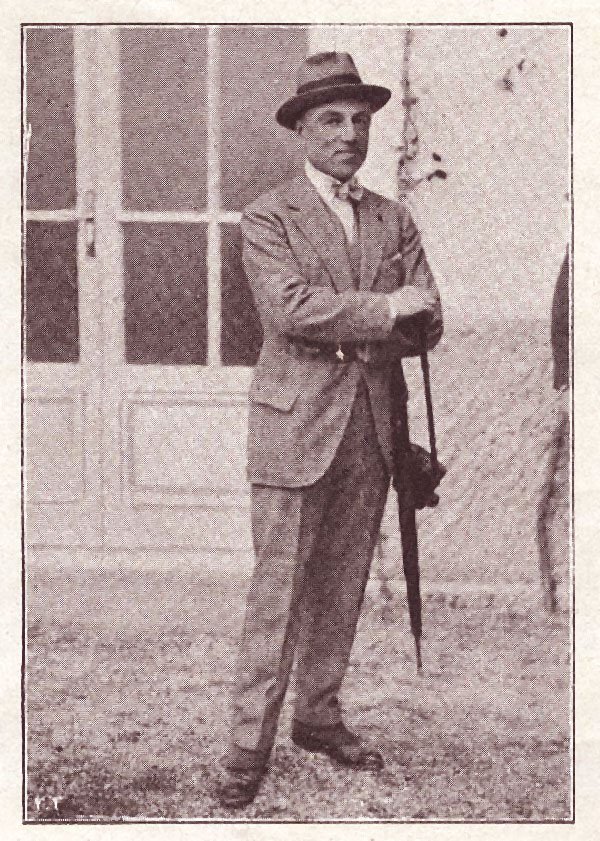
In 1898 Tesio and his wife, Donna Lydia, bought the land near the village of Dormelletto that became the Dormello Stud. He was not a rich man, and his first ten years were a struggle. They taught him that chasing fashionable bloodlines was a fool's game. Once his methods clicked, Nearco and Ribot followed.
How we know what he did
Late in life Tesio wrote a book, Breeding the Racehorse. It shares his thinking about breeding, but it never explains exactly how he chose his matings.
What he left behind was his pedigrees. Decades later, the pedigree researcher Ken McLean studied the pedigrees of Tesio's best horses and found the patterns he kept returning to. McLean published them in Tesio: Master of Matings (1984). The American breeder and author Kathleen Kirsan built on that work in Become Your Own Tesio.
Tesio worked decades before computers. His tool was a split pedigree book, kept by hand: stallions he was interested in on the top half of each page, his own mares on the bottom half. Donna Lydia helped keep it up to date. Tesio spent his evenings flipping between the two halves until he found the right stallion for each mare.
Tesio's methods, in plain English
1. Breed from proven performers, not fashion. Tesio bred racehorses to race, not to sell. According to McLean, he used stallions that had been great on the track even when the market had cooled on them as sires. He judged mares the same way, looking for families with real racing ability behind them rather than the most expensive catalogue page.
2. Balanced breeding and quality ancestors. This is the idea at the heart of his method. When he doubled up on an ancestor, he wanted it to come through both a son and a daughter of that ancestor, not through two sons. McLean called this "balanced breeding". Today we usually call it sex balance. Tesio avoided stallions with too many duplications through sons alone.
Just as important was who he doubled up on. Tesio only concentrated ancestors of real quality: proven champions on the track and at stud, such as the unbeaten St. Simon. To Tesio, the ancestors inside a pedigree mattered as much as the physical horse standing in front of him. You'll see this in the Nearco story below, when he couldn't get the stallion he wanted and used its full brother instead, because the brother carried the same ancestors.
3. Where he placed his linebreeding. When he linebred to a special ancestor, McLean found Tesio usually preferred 3x4: the same ancestor three generations back on one side and four on the other, and in the middle of the pedigree rather than straight up the top line of both parents. It was a preference, not a rule. Nearco himself carried St. Simon four and five generations back. Nor did Tesio follow one recipe. According to his business partner, each year's mating list included a few close inbreedings, a few complete outcrosses (no shared ancestors), and a few proven "nicks" (sire and dam lines that had worked well together before).
4. Give a good mating more than one chance. Genes shuffle differently every time, so the first foal from a good mating may not show what the mating can do. Tesio usually repeated a mating he believed in at least once before judging it.
For more consistent foals, Tesio believed, you have to reduce the variety.
Tesio explained this idea in his own book. He compared breeding to shaking a kaleidoscope: the same pieces form a different pattern every time. If you want each pattern to look more like the last, you reduce the variety of pieces. In breeding terms, you concentrate the best ancestors, which is exactly what linebreeding sets out to do.
Nearco: the mating that changed the breed
Nearco is the best example of how Tesio thought.
In 1915 Tesio bought a plain but sound filly called Catnip at the Tattersalls December Sale for just 75 guineas. She had little to recommend her on looks. According to McLean, the Tesios had set out to buy daughters of Spearmint, and Catnip was one of them. Catnip produced Nogara, Italy's champion filly of 1931.
In 1934 Tesio wanted to send Nogara to Fairway, Lord Derby's top English stallion and later a four-time champion sire. Tesio couldn't get a nomination. Instead of picking a different stallion, Tesio went looking for Fairway's full brother, Pharos, who was standing in France. The foal was the unbeaten champion Nearco.
That choice says a lot about how Tesio thought. Fairway and Pharos had exactly the same sire and dam, so Pharos offered the same ancestors. Tesio wasn't set on a particular stallion. He was set on the pedigree, and the ancestors within it.
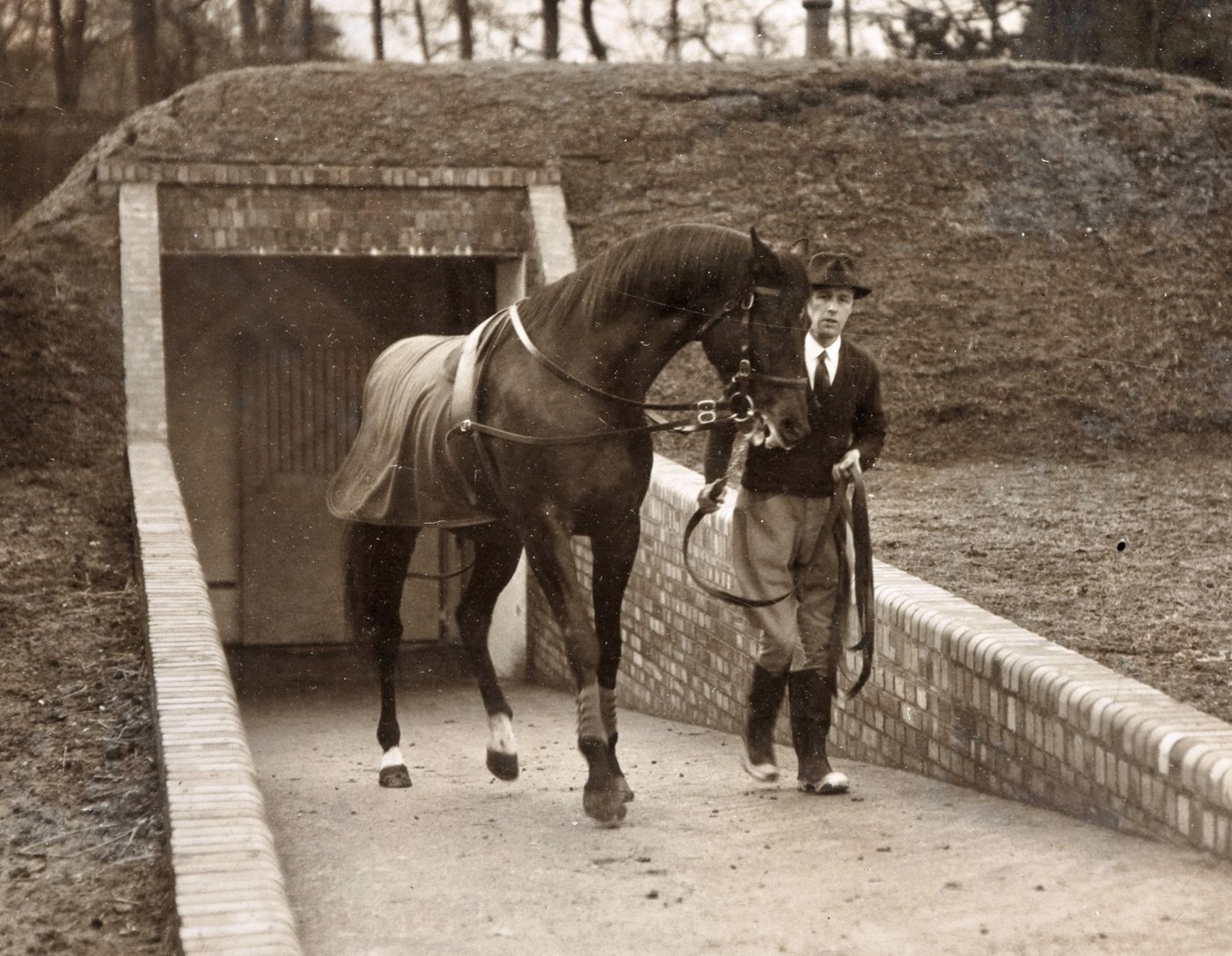
In 1938 Tesio sold Nearco to the English owner Martin Benson for £60,000, and he went to stud at Beech House in Newmarket.
A legacy that keeps winning
Tesio's influence didn't end with his own horses. Through their descendants, Ribot and Nearco have kept winning the world's biggest races for generations.
Prix de l'Arc de Triomphe
Ribot line
- Molvedo 1961son of Ribot
- Prince Royal 1964son of Ribot
- Alleged 1977, 1978great-grandson of Ribot
- Suave Dancer 1991dam by Alleged
King George VI and Queen Elizabeth Stakes
Ribot and Nearco lines
- Ribot 1956bred by Tesio
- Ragusa 1963son of Ribot
- Nijinsky 1970Northern Dancer, Nearctic, Nearco
- Mill Reef 1971Never Bend, Nasrullah, Nearco
- Dancing Brave 1986Lyphard, Northern Dancer, Nearco line
- Galileo 2001Sadler's Wells, Northern Dancer, Nearco line
US Triple Crown
Nearco line
- Secretariat 1973Bold Ruler, Nasrullah, Nearco
- Seattle Slew 1977Bold Ruler line, Nasrullah, Nearco
- Justify 2018Storm Cat line, Northern Dancer, Nearco
Breeders' Cup Classic
Nearco line
- Sunday Silence 1989Halo, Turn-To, Royal Charger, Nearco
- A.P. Indy 1992Seattle Slew, Nasrullah line, Nearco
- Ghostzapper 2004Deputy Minister, Northern Dancer, Nearco
- Invasor 2006Blushing Groom, Nasrullah, Nearco
What still holds up
Tesio worked before anyone understood DNA, yet his core ideas have stood up well.
Well established.
- Genes shuffle at every mating. Tesio read about Mendel's experiments on a train in 1906, and it changed how he thought about breeding. His kaleidoscope comparison is still a good description of how genes are passed on.
- Each ancestor's share halves, on average, with every generation, so doubling up on an ancestor raises the chance a foal inherits that ancestor's genes.
- Inbreeding concentrates everything, the bad as well as the good. A 2018 University of Sydney study of more than 135,000 Australian racehorses measured inbreeding across each horse's whole pedigree, around 25 generations back, not just the first few. It found that horses with more inbreeding generally raced worse. But the effect depended on which ancestor was doubled up. In other words, who you concentrate matters, which fits Tesio's insistence on quality ancestors.
Tesio's regret.
- Speed. Tesio bred for the Derby and loved stayers. According to McLean, Tesio felt his biggest mistake was avoiding sprint sires in his mares, because he knew that classic stamina can be built on top of a speed line. Given what we now know about the Speed Gene, that regret looks very wise.
My view. Tesio's methods are not a formula, and he never claimed they were. They are a way of stacking the odds in your favour. Sex balance is one of the first things I look for. I also look for ancestors with affinities (ancestors that seem to work especially well together in a pedigree), and for ancestor "recipes" I have observed having an impact. I start by looking for clues in the 3rd to 7th generations.

Michael MarosaThe Pedigree Nerdmichael@digitalbloodstock.com
More pedigree stories, straight to your inbox.
I'll be breaking down the horses everyone's talking about, and what their pedigrees can teach us. Free, straight to your inbox.
Free. Unsubscribe any time. How we use your details.
Sources
- McLean K (1984). Tesio: Master of Matings.
- Kirsan K. Become Your Own Tesio.
- Tesio F. Breeding the Racehorse (English edition, 1958; first published in Italian, 1947).
- Todd ET et al. (2018). Founder-specific inbreeding depression affects racing performance in Thoroughbred horses. Scientific Reports 8: 6167.
- Race records and dates: Racing Post (Tesio factfile, 2019); Thoroughbred Daily News; Wikipedia (Federico Tesio, Nearco, Coronation Cup, Martin H. Benson).